Robert Attenborough 7 Remarkable Things That Made Him a Giant of World Cinema
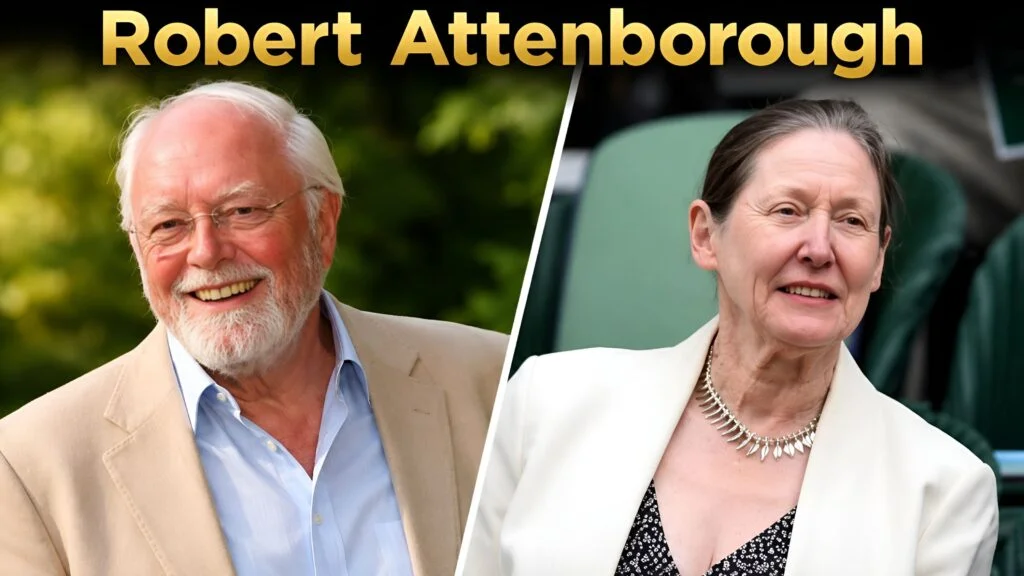
Robert Attenborough
Introduction
A very small number of them change the perspective of the audience in the world. One of those few was Robert Attenborough, better known as Sir Richard Attenborough. He was an actor, director and producer who worked in British cinema during the war and then on to Hollywood blockbusters and Oscar-winning epics over a period of over 60 years.
He is best known for his direction of Gandhi or for portraying the tolerant billionaire John Hammond in Jurassic Park. But, his story doesn’t stop at those two landmarks. Here are seven aspects to his life and work that help to make his legacy still relevant today.
1. His Childhood and Youth
His childhood and youth 1913-1932
Richard Attenborough was born at the 29th August 1923 in Cambridge, England, and raised in Leicester. He was from a family valued education and social responsibility as his father, Frederick, was a university college principal.
In 1939 family accepted two Jewish refugee girls who were escaping from Nazi Germany. Such encounters inspired him embody the same compassion moral gravity found in movies.
The ascendance of a young actor.
After training at the Royal Academy of Dramatic Art (RADA), Attenborough started acting on stage and screen in the early 1940s. In the Second World War, he served in the Royal Air Force and was employed with their film unit.
He broke through with Brighton Rock (1947) in which he was cast as the cold and brooding Pinkie Brown, a teenage gangster. This role was enough to prove that he was more than a good leading man. He could be threatening, fearful and vulnerable and all with ease.
2. Memorable Roles across Decades
But Attenthorpe’s acting career proved to be surprisingly diverse. His most famous acts are:
The Great Escape (1963): He was Squadron Leader Roger ‘Big X’ Bartlett, who was the leader of a daring breakout of prisoners of war in one of the most popular ensemble movies in cinema history.
10 Rillington Place (1971): Serial killer John Christie was a grisly role he played that was very memorable but also celebrated.
To a new generation of viewers John Hammond introduced himself as Jurassic Park (1993).
Miracle on 34th Street (1994): He was a very convincing and warm Kris Kringle.
The transformation from murderer to gentle Santa Claus is the range that is setting him apart.
3. Behind the Camera (Steps)
Attenborough switched to directing in the late 1960s. His debut, Oh! What a Lovely War (1969), was a bold anti-war musical. He followed it with a smaller scale war film, Young Winston (1972), and the large-scale war drama A Bridge Too Far (1977).
As an actor himself, he had an appreciation for actors. He was known to be generous and encouraging as well as passionate on set, which enabled him to get great performances from large casts.
4. Gandhi: The Dream of a Lifetime
Gandhi (1982) was Attenborough’s great work. He tried to adapt Gandhi’s story to the screen for nearly two decades, and he would have continued to do so if he had been able to find funding. He persevered and his efforts were rewarded.
Ben Kingsley’s portrayal of the title has become legendary and the movie won eight Oscars, including Best Picture and Best Director for Attenborough. It proved that a serious historical drama on non-violence and political change can be a favourite among the global audience as well.
5. Films With a Conscience
Following Gandhi, Attenborough selected projects that had an emotional and social significance:
Cry Freedom (1987): A strong film based on the life of the South African activist Steve Biko and the oppression of apartheid.
Chaplin (1992): Bio-portrait of Charlie Chaplin with an Oscar nominated performance by Robert Downey Jr.
Shadowlands (1993): The moving tale of a love and a loss, of the writer C.S. Lewis.
Cinema was more simply entertainment to Attenborough. It was way of fostering empathy and of initiating an awareness of justice, memory and human dignity that could be discussed.
6. Resilience, Personal Life and Honors
Attenborough was married in 1945 to actress Sheila Sim and their marriage endured for almost 70 years. He was a leader of institutions like BAFTA and RADA and a supporter of the arts all of his life. In 1976 he was knighted and in 1993 he was created Baron Attenborough in the Baronetage of 1977.
Tragedy was also a part of his life. He lost his granddaughter, daughter and mother-in-law in the Tsunami in Indian Ocean in 2004.He died on 24 August 2014 at the age of 90. His younger brother, David Attenborough, is now a world-famous natural history presenter.
7. Learning From His heritage
There are a few things that we can learn from Attenborough’s life:
It takes a long time to be Gandhi: 20 years to make, but his masterpiece.
Keep on evolving: He has been successful to reinvent himself from an actor to a director.
Make your platform for good: His movies addressed large moral issues.
Grief and resilience: He continued to give back to the world even in the face of tremendous loss.
Conclusion
The name Robert Attenborough is a frequent search on many pages, and is indeed the name of the creator of many works, but he left behind an artistic vision and a moral compass that are compelling. Whether it’s the spicy suspense of Brighton Rock, the majestic presence of Gandhi or the magic of Jurassic Park, his career proves that when talent meets conviction, anything is possible.
Gandhi, The Great Escape and Shadowlands are a great starting set if you are new to his work. Both are facets of an artist who felt that films could help to make the world a bit more thoughtful, a bit more humane.
For more info: Hb Seo Service